pdldevv2

4 Ways To Ensure Confidential Conversations Are Private

Ensuring a confidential conversation remains private is vital in legal, commercial, professional, and sensitive personal matters.

It is understandable for good-faith people to respectfully assume these conversations are confidential. However, in our 25 years’ experience, we’ve witnessed things like covert recording, eavesdropping, information gathering, and accidental errors – all ultimately disclosing sensitive information.

Fortunately, there are a number of practical steps and considerations you or your organisation can take to do everything possible towards ensuring your discussions remain secure and private.

We’ll outline and explain these in more detail below. As always – if you have any questions, don’t hesitate to contact us on +44 (0) 203 747 1865.

Golden Rule: If In Doubt – Do Not Reveal Sensitive Information

First and foremost, if you suspect a conversation is not private – in whatever sense – or you can not be sure, you must always elect not to reveal confidential or sensitive information.

It is natural to feel compelled to answer questions immediately or clarify details when prompted. But it’s more important to remember to exercise caution and discretion and withhold any information necessary until privacy is verified.

Moving forward, the advice below is designed to assist you in ensuring all possible measures towards privacy are taken. This is what to do, how to do it, and what to look out for along the way.

How To Ensure Privacy In Confidential Conversations

Please find below 4 key practical measures to improve the privacy and security of your confidential discussions.

1 – In-Person Meetings Where Possible

Modern technologies of communication deliver convenience, efficiency, immediacy, and wider reach, and it’s entirely natural that it’s at the heart of the way we now live and work. However, it’s important to be alert to the risks of security breach that come with it.

It’s even more important to be aware of the occasions on which face-to-face, in-person conversations are logistically and geographically possible, as the minimising of technological risk – and ensuring the information is only shared with the person(s) intended – may justify and outweigh the reduced convenience.

Where possible – in-person meetings are advisably conducted as ‘walking meetings’ and avoiding fixed locations to reduce concerns of the monitoring or recording of that single static environment.


2 – Strong Encryption

If confidential conversations must take place digitally, prioritise communication platforms which provide the strongest possible encryption, privacy controls, and security features.

It’s important to research the available softwares and platforms to ensure their level of protection meets your level of need.

Admittedly, the landscape of secure communications is always evolving, and something we remain abreast and ahead of. As such, we are happy to advise our valued clients on encryption and communication at any time.

3 – Pay Attention To Personal Cues

Human behaviour can also provide important indicators of the level of privacy present – and the other party’s commitment to it. If a conversation feels unusually structured or directed, it’s important to consider why that is.

Below are some examples of red flags that might indicate another party is attempting to direct a conversation towards certain outcomes valuable to, for example, a covert recording. It’s important though to also remember that these are only possible indicators – as there is natural variance in conversational approach – particularly in high-stakes situations.

Example Cues:

  • Persistent attempts to steer the conversation towards a particular topic.
  • Questions that appear designed to elicit specific responses.
  • Requests to repeat information that has already been provided – particularly paraphrased, multiple times, or more clearly.
  • Unusual positioning, clothing, or behaviour – out of place in the circumstances.

Caution is always appropriate with confidential matters – but being alert to behavioural cues, and trusting your valuable instincts – may help identify situations where additional caution is appropriate.

4 – Be Open About Privacy Concerns

If both parties genuinely share the common objective of the intent to maintain confidentiality – transparency will be an open, shared vision, rather than a difficult topic.

It’s understandable to be reluctant to raise privacy concerns for fear of causing offence or conveying an apparent mistrust in the other party. But where privacy is truly a shared priority, raising the subject should be welcomed by the other party as it demonstrates a strong awareness of – and sensitivity to the matter, rather than signalling automatic distrust.

A transparent and respectful conversation should provide reassurance to all involved.

Confidential Conversations: Any Questions?

As part of our commitment to discretion and confidentiality, we are always happy to discuss concerns surrounding private conversations and the measures available to help protect them.

Contact us to discuss your circumstances in confidence.

Is It An Offence To Put A Tracker On Someone’s Car?

One of the most commonly asked questions we encounter at PDL is “Is tracking someone’s car legal?”.

It’s a deeply understandable question, as vehicle tracking can provide so much helpful information in a range of crucial professional or personal circumstances, but it is of course vital to ensure any investigations are conducted within the law at all times.

We’ve put together this post to discuss:

What Car Trackers are

How Car Trackers Work

When And Why People Wish To Track Vehicles

Is It Legal To Put A Tracker On Someone’s Car

How To Ensure You’re Acting Legally

Read more on this below.

Is It An Offence To Put A Tracker On Someone’s Car?

Car Trackers: What Are They, And How Do They Work?


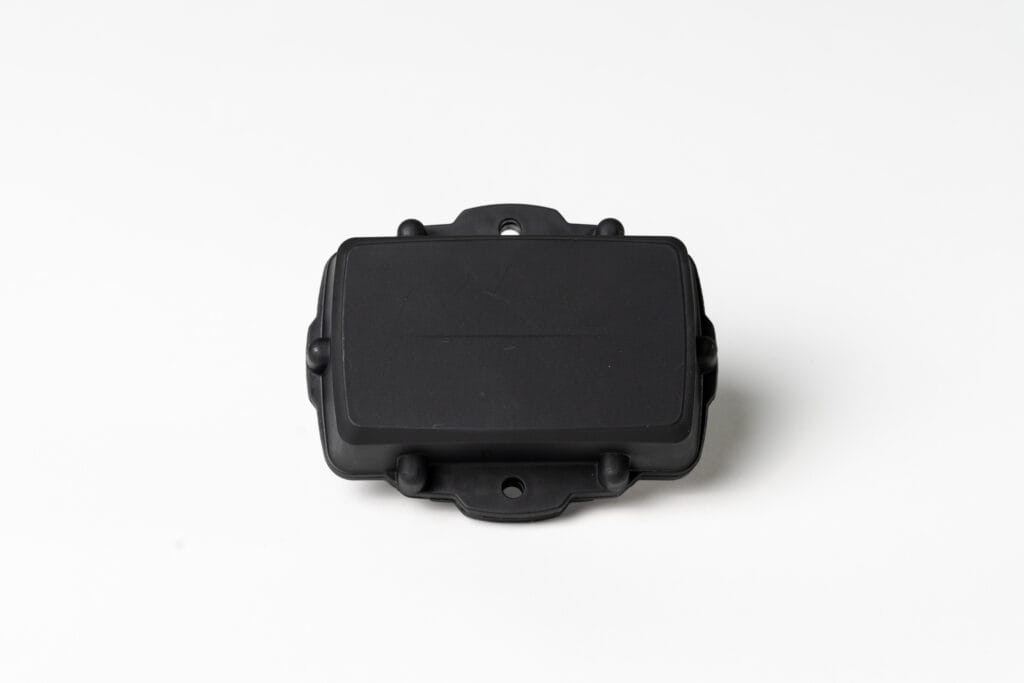
A tracker in this context means a small GPS tracking device designed to be discreetly and covertly attached to a car, other vehicle, or asset.

The tracker then enables the remote tracing of the car’s location and movements, providing what can be invaluable insight into its location, and the ability to potentially interpret its owner/operator’s behaviour, and intentions.


When And Why Do People Wish To Track Vehicles?


The reasons are many and varied, but all share something in common. At the heart of them is the desire firstly to understand the vehicle’s location and movements, and secondly to be able to demonstrably prove this in a range of legal, personal, or professional circumstances.

Examples might include an employer tracking company vehicles, an organisation or individual protecting an asset against theft, or an individual concerned about another’s whereabouts. Very different reasons – but all sharing that same desire to gain insight and understanding, to inform future decision making.


Is It Legal To Put A Tracker On Someone’s Car? 

The short answer is it depends. On intent, on method, on if and how data is gathered – and then used, and on many other factors. It’s important to ensure that the process used – and equally importantly, the justification for the vehicle tracking itself – is thoroughly explored, understood, and soundly reasoned out. For one thing to ensure your behaviour is legal, and for another to ensure that consequently any findings are admissible in court if and when required.


How Do I Ensure I’m Acting Legally? 

Because this issue is complicated, and variable, the only answer we can provide is to contact us to discuss your needs. Our 25 years experience in – among other things – tracing, surveillance, and legal matters gives us as much knowledge around legality and ethics as it does the practical on-the-ground skills to enact operations in practice.


Any Questions On Vehicle Tracking?

Contact us via the form below, or directly on: +44(0) 20 3747 1865

How Do You Detect A Hidden GPS Tracker On A Car?

Covert GPS trackers on cars and other vehicles are among the most effective technical surveillance measures.

A question we commonly receive from our valued clients and potential clients – especially those concerned with surveillance, counter-surveillance, and the sense they’re being tracked or watched – is: How do I know if there’s a hidden GPS tracker on my car?

This post concerns various answers to that question: what to look for, what to avoid, how we can help, and also crucially – how to ensure you’re always acting safely and legally too.


Before We Begin: Safety 

There’s some vital housekeeping to cover before addressing any specifics. And this concerns what it may indicate that you initially find yourself in the position of asking the question “how do you detect a hidden GPS tracker on a car?”

1 – Are You In Fear For Your Safety?

Is the reason you suspect there may be a hidden GPS tracker on your vehicle indicative of a bigger issue that means you’re in any way fearing for your safety or wellbeing? If so – it’s essential to contact the police or relevant authorities to express your safety concerns and seek appropriate help.

2 – Have You Considered How To Investigate This Safely?

A willingness to investigate whether any GPS tracking devices are hidden on your own vehicle is one thing – but it’s important not to automatically presume you will do so safely. Examples of this include (but are of course not limited to) not doing so on or near an open road, and not with the car’s engine running. Our advice to you would always be to not undertake anything you can’t be certain of undertaking safely.

3 – Is This Part Of A Bigger Picture Of Your Counter-Surveillance Needs?

After considering your personal safety, if you find that this vehicle-tracking concern is part of a bigger picture of you needing counter-surveillance measures, you can contact us any time to discuss your needs. We’ll help you undertake an audit of all your needs in this field, identify any areas of concern, and help you to strategise to ensure you are not under any form of surveillance.

Hidden GPS Trackers On Cars: What To Look For


The fact that GPS trackers are by definition technological devices can often create an assumption that the best methods used to detect them are also technological. And while that idea holds some truth and utility, there is no substitute for physically looking in, around, on, and under the car or vehicle itself. To reiterate – our advice is not to do this if you are inexperienced and in any way uncertain of the relevant safety and practicality.

Ideally, the attempt to detect a GPS tracker covertly placed on a car would combine physical and technological methods, and be undertaken by someone with significant prior experience, to ensure safety as well as certainty that no stone has been left unturned.

Why Use PDL To Find GPS Trackers Hidden On Vehicles

We have all the skills and experience required to help you. Here are the key benefits of working with us to locate GPS Trackers covertly placed on cars or other vehicles:

We deliver a combination of the physical and the technological so that nothing is missed.

Our significant experience means we have knowledge of all the tricks and hiding places used – meaning our sweep can go above and beyond what’s possible for the individual.

Our readiness to advise on any wider counter-surveillance measures required, if you fear the tracking of your vehicle is part of a bigger picture issue.

Please read more on why to use PDL more generally.

We’re Here To Help

Please contact us any time to discuss how we can help you detect hidden GPS trackers, or advise on any wider counter-surveillance needs.

How Discreet Are Private Investigators?

Understandably, discretion is a primary concern of every client we meet – be they private individuals or corporate organisations.

The nature of private investigation work means operations are always some combination of: confidential, personal, professional, legal, and sensitive.

For this reason, it follows that – for us as private investigators – being discreet is essential to the operations themselves, and the consequent reassurances we can give to our clients.

Many potential clients have a worry around the private investigations industry as a whole – perhaps based on old stereotypes of private detectives, an old stereotype we work hard to entirely defy. And this worry makes them ask: how discreet are private investigators?

The short answer is: private investigators should be extremely discreet.

The longer answer might advise you to undertake some investigation of your own – in the form of asking questions and researching to ensure you’re working with a detective or detective agency that is absolutely clear in its understanding of discretion’s importance, and treats it with the value it warrants.

How Discreet Are Private Investigators?

Private Investigators: Why Discretion Matters

There are many reasons that being discreet is so vital to private investigation work, including:

  • Covert nature of operations
    Many investigation services such as covert surveillance and GPS vehicle tracking require discretion by their very nature. On-the-ground investigative operations must be undertaken efficiently and covertly in order to succeed.
  • Handling of sensitive information
    Whether it’s desktop intelligence or preparing reports on the findings of background investigations, private investigators are habitually handling sensitive information. It’s important this is done with care and discretion in order to honour privacy and GDPR.
  • Legal consequences of findings
    Often our work is part of building cases or building towards legal consequences and tangible outcomes for our clients. It’s important due process – including discretion – is maintained throughout to ensure findings remain legally admissible.
  • Indicative of serious, professional approach
    Operation-specific points aside, it could be argued that a commitment to being discreet is strongly indicative of an investigator’s general level of professionalism and seriousness, and can be taken as reassurance of the detective or agency’s credibility.

How To Check A Private Investigator Is Discreet

There are three main ways to check a private investigator is discreet:

Have an open discussion with them.
Ask about the investigator or agency’s approach to – and policy on – discretion during your initial consultations and conversations with them. Then ask yourself: do they seem open to this line of conversation? And are the answers you receive satisfactory and reassuring? This should be yes, and yes.

Research the investigator or agency

This means considering their physical and online presence analytically, studying websites, reviews and testimonials, etc. This may also lead you to specific material designed to provide information and reassurance about the investigator or company’s discretion and professionalism. At PDL, for example, we have on our website a Statement Of Standards. We can also offer a Non-disclosure agreement (NDA) to all clients, giving additional reassurance of confidentiality.

How do they communicate?

Being discreet should be at the heart of the way they communicate and handle interactions with you. The specifics of this will depend on the investigation, how you exchange information, how you/they want to work, and so on. But some examples are: how private are electronic communications? Is encryption used? Which email providers are being used? Or on the flipside – how are in-person meetings handled? Do they feel discreet, secure, private? Observe these points.

Any Questions On Discretion?

As part of our own commitment to being discreet – at PDL we are always open to hearing from you with questions on how we work, and what we do to ensure we are always discreet.

Contact us via the form below, or directly on: +44(0)2037471865


How Much Does A Private Detective Cost?

This question is extremely frequently asked by potential clients, and – more widely – anyone with an interest in the Private Detective industry. One reason “How much does a private detective cost?” is such a common question is that so much of our industry is necessarily secretive – as part of best practice discretion. Additionally, a significant proportion of the clients and potential clients who contact us at PDL have not worked with a Private Detective before, meaning they might lack a point of reference in relation to pricing and price points within our industry. For this reason, it’s important to us to always demonstrate our trademark transparency and consistency, to ensure any new clients who may be feeling tentative understand that they’re in safe hands, and can trust our integrity.

Fees, private detective

Private Detective Cost: A Bespoke Service

First and foremost, we provide bespoke services to our clients – be they corporate clients or private individuals. Our experience gives us the insight that a bespoke service is the only real effective approach to vastly varying client needs. We will always begin by taking time to understand you, your needs, and all salient facts. We will then propose a bespoke service, with operation-specific processes – designed to achieve a successful outcome for you. Consequently, it’s not strictly possible to outline exact fees for all our services without being disingenuous – because the short answer is that the fees will be determined by the exact services we provide to you – which in turn are dictated by your needs. However, in the interest of delivering as much transparency and clarity as possible, we will detail some specific ‘starting from’ fees later in this post, as a guideline. Factors In

Private Detective Pricing

Key determining factors in our pricing include: – Services / operations required: what technological needs are present? – Are ‘man-on-the-ground’ services such as covert surveillance required? – Is this the work of one operative, or more? – How much work can be completed as ‘desktop investigations’? – Does the operation require the additional insight of our lead private detective? And other similar factors – all of which we will discuss with full transparency as a natural aspect of discussing your specific needs. Examples of

Private Detective Fees

Notwithstanding that our private detectives’ fees are always determined by a client’s specific needs as determined by our consultations, as part of offering a bespoke service, please find below some sample fees:

Person Tracing Services – from £390

Asset Investigation (UK-based) – from £540

Background Investigations – from £650

Consultancy Services – from £200

Get In Touch

To discuss your specific needs, and arrange your free consultation, you can contact us now

Why Use A Private Detective To Find Someone?

At PDL, one of our core services is People Tracing and we’re extremely proud of our 100% success record of finding people when instructed – be they long-lost family members, or corporate debtors. A common question we receive directly – and hear of more widely – is “Why use a private detective to find someone?” The reasons are manifold, and comprise everything that makes us the trusted and successful organisation we are: Experience, Insight, Quality, Legality, Ethics, and Precision. Here’s more detail:

Private detective to find someone

Reasons To Use A Private Detective To Find Someone 

#1 – Our Immaculate Record

At PDL we have a 100% success record in tracing cases. We are extremely diligent and dedicated in protecting our clients’ interests and getting results – because our clients’ success is essential to our success. Our private detectives’ perfect record in finding people is the ideal exemplar of our quality and commitment, and a key point of reassurance for new clients instructing us to find someone.

#2 – Knowledge & Experience

By using one of our private detectives to find someone, our clients tap into decades of knowledge and experience that can’t be faked, or achieved elsewhere. Our operatives bring a wealth of knowledge to every case – based on the thousands of cases already behind them in impressive careers to date. Additionally, all the experience we’ve gained in our many, many successful tracing cases equips us with the benefit of hindsight, and sharp instincts for situations – which proves invaluable in the more complex person tracing cases.

#3 – Access To Information

At PDL, our key partnerships, access to data, and knowledge of where pieces of information are to be found all combine to give us unrivalled access to data, within our industry. We know exactly where to find any given piece of data – and we also know what is and isn’t permissible from a data protection perspective. Using tools has always been key to our private detectives successfully finding people, and we’ve invested and modernised repeatedly to ensure we continue to lead the way in the UK.

#4 – Legality & Ethics

A principle that has always been at our core – and always will be – is that we do not ever compromise legality or ethics in our operations. We make no exceptions to this, under any circumstances – and will err on the side of caution in any uncertain situation. It’s vital to us at PDL that we can provide our clients this reassurance – no matter what – so they can have full trust in our operatives, and in PDL as an organisation, as a whole. Where legality and ethics are particularly relevant to finding people, lies in the typical reasons for person tracing. That is to say – so often the results of our detectives finding someone for a client will lead directly to sensitive legal and financial cases. It’s vital that our clients have strong legal grounding in those cases, and consequently it’s also vital that everything in the operation up to that point has been handled with legal and ethical perfection – so as to not compromise the client’s chances of success.

#5 – Third Party Safety

It’s extremely common, when a new client instructs our private detectives, that they’re bringing a case that has previously been attempted by another organisation – which has regrettably not succeeded in achieving results for that client. A more recent phenomenon though, has been instances of clients having attempted to find someone, or to conduct surveillance themselves. We advise against this extremely strongly, for the following reasons: – The absence of the knowledge and experience, detailed above, that is crucial to a successful operation. – The potential to compromise your own legal case by acting in ignorance of the law. – Simply put – covert surveillance is an art, and is not easily recreated. Particularly if you are known to the individual – which, naturally, makes it near impossible.

#6 – Quality Of Operatives

We’re extremely proud of our reputation, 100% success rate, and the skill our private detectives use in finding people. Our operatives are selected to the highest possible standards, based on their abilities, backgrounds, communication skills, and conduct. Our operatives’ quality is the heart delivering success to our clients – and thereby the sustaining of our own fantastic reputation. Read more on Why To Choose PDL

#7 – Professional Witness Status

Our role as private detectives means we have “Professional Witness” status. This dictates that evidence we provide can be admissible in court – by the very nature of us being respected professional private detectives – which can be invaluable in ensuring our clients’ necessary legal outcomes are met. We’ve acted as a “Professional witness” on many previous occasions, and thus know exactly how to do so, to support any legal case that arises after using our private detectives to find someone.

Why Use A Private Detective To Find Someone? A Summary

To summarise – our private detectives combine a 100% person-finding success record, with knowledge, skill, experience, unparalleled data access, a flawless legal understanding, being a third party, exercising great discretion, top-quality operational ability, and professional witness status; to make us perfectly positioned to find someone at the request of any individual or corporate client, as required. We’re proud of our 100% record, and do not intend to lose it.

Looking To Find Someone? 

If you require a private detective to find someone – to reconnect personally, chase debtors, or protect your corporate assets and interests – please contact us now for your free, no-obligation consultation.